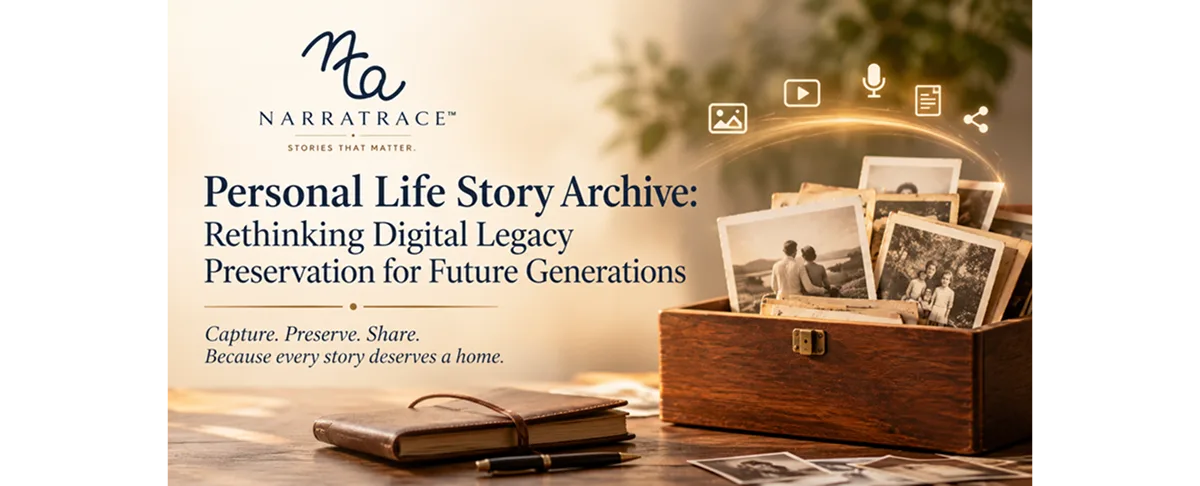
A photograph can preserve a face, but only a story can preserve the life behind it.
Every individual carries a lifetime of experiences, lessons, relationships and defining moments. Yet, much of this personal history remains undocumented, scattered across old photographs, handwritten notes and conversations that are rarely revisited. As generations change, the context behind these memories can gradually disappear.
A Personal Life Story Archive offers a more meaningful way to document these experiences, bringing together personal narratives, photographs, voice recordings and reflections in one organised space. Beyond conventional digital storage, it creates an opportunity to preserve individual identity, family heritage and the experiences that shape generations.
Why Is a Personal Life Story Archive Important in Preserving Family History?
Family history is rarely defined by dates and milestones alone. It is found in the decisions people made, the traditions they maintained, the challenges they overcame and the small everyday moments that eventually became treasured memories.
Traditional photo albums and personal journals preserve fragments of the past, but they often lack the personal context that gives those moments their significance. A photograph may identify a person, but it cannot independently explain their aspirations, struggles or the circumstances surrounding that particular moment.
Creating a Personal Life Story Archive helps bridge this gap by documenting experiences in the storyteller’s own words.
Some of the most valuable elements worth preserving include:
- Personal Experiences: Childhood memories, educational journeys, professional milestones and defining life decisions.
- Family Heritage: Cultural traditions, ancestral stories, family values and meaningful customs passed between generations.
- Voice and Expressions: Original voice recordings and video responses that retain the personality and emotional character of the storyteller.
- Photographic Context: Stories, relationships, locations and occasions associated with old family photographs.
- Personal Wisdom: Life lessons, philosophies, advice and reflections that may guide future generations.
The true value of a memory lies not only in remembering what happened, but in understanding why it mattered.
A structured digital archive makes these experiences easier to revisit, explore and selectively share with loved ones, transforming isolated recollections into a more comprehensive account of personal history.
How Does Digital Legacy Preservation Help Connect Generations?
Digital Legacy Preservation is becoming an important consideration for individuals who want their personal experiences and family histories to remain accessible beyond their lifetime.
Unlike conventional data storage, meaningful legacy preservation focuses on maintaining the human context behind personal records. It brings together stories, photographs, recordings and written reflections in a way that allows future generations to understand the people and experiences that came before them.
An effective preservation approach should consider several important dimensions:
- Authentic Storytelling: Preserve experiences in the storyteller’s original words rather than reducing them to generic summaries.
- Multimedia Documentation: Combine written narratives with photographs, voice recordings and videos.
- Organised Life Chapters: Arrange experiences into meaningful periods, making personal histories easier to navigate.
- Controlled Family Sharing: Allow individuals to decide which stories can be shared with particular family members.
- Future Communication: Preserve personal letters and messages intended for significant milestones and future occasions.
This approach also changes how families interact with their history. Instead of depending entirely on fading recollections or occasional conversations, family members can revisit preserved experiences and discover perspectives they may never have had the opportunity to hear firsthand.
Technology can preserve information. Thoughtful storytelling gives that information a human connection.
How Is AI Transforming Personal Storytelling and Memory Preservation?
Artificial intelligence is introducing new possibilities in personal documentation by making the storytelling process more conversational, accessible and structured.
Writing an autobiography or documenting an entire family history can feel overwhelming. Many people have meaningful experiences to share but struggle with where to begin, how to organise their thoughts or how to translate memories into written narratives.
AI-guided interviews offer an alternative. Rather than requiring individuals to write lengthy accounts, they encourage natural conversations through relevant questions and contextual follow-ups.
This technology can support personal storytelling through:
- Guided AI Interviews: Thoughtful questions help individuals explore childhood, relationships, professional experiences and significant life events.
- Contextual Follow-up Questions: Conversations can explore additional details that might otherwise remain unspoken.
- Automated Transcription: Spoken responses can be converted into written records for easier reference.
- Voice and Video Preservation: Original recordings retain the storyteller’s expressions, personality and distinctive voice.
- Intelligent Organisation: Personal experiences can be arranged into searchable records and meaningful life chapters.
- Photo-based Exploration: Selected photographs and family context can help generate additional questions and insights for review.
AI should serve as an enabler of human expression, not a replacement for it. The authenticity of a personal story must always remain with the individual sharing it.
What Makes Narratrace Different in the Digital Legacy Space?
Narratrace approaches memory preservation from a deeply personal perspective. Rather than treating memories as isolated digital files, the platform brings together guided storytelling, multimedia documentation and future-oriented communication.
Its features are designed to make capturing personal experiences a more natural and accessible process.
Key capabilities include:
- AI Interviews: Guided conversations help individuals document their experiences, reflections and life lessons through thoughtful questions.
- Time Capsule Letters: Write personal messages today, preserve them and schedule their delivery for meaningful future occasions such as weddings, graduations and milestone birthdays.
- Voice and Video Responses: Retain the original voice and visual expressions associated with important memories.
- Decade Archive: Organise personal interviews and recordings into different life chapters for a more structured historical record.
- Circles: Share selected completed interviews with designated family members and trusted individuals.
- Photo Memories: Connect photographs with personal stories and contextual details, creating a richer record of family history.
Privacy is equally important when dealing with deeply personal information. Narratrace follows a private-by-default approach, with encrypted storage and transmission, permission-based sharing and export options for supported content. The platform also states that private memories are not used to train AI models.
Because preserving a story should never mean surrendering ownership of it.
Summary: Preserve the Stories That Make Every Life Unique
A person’s legacy is not limited to professional achievements, significant milestones or material possessions. It is also reflected in everyday experiences, personal relationships, inherited values and the lessons accumulated throughout a lifetime.
A Personal Life Story Archive provides a structured way to document these experiences, while Digital Legacy Preservation creates opportunities to maintain their relevance across generations.
With AI-guided interviews, multimedia memory capture, organised life chapters, private sharing circles and time capsule letters, Narratrace brings a more thoughtful dimension to personal storytelling.
Ultimately, preserving memories is about more than looking back. It is about ensuring that future generations have the opportunity to understand the people, experiences and values that shaped their family history.
Some stories deserve more than a moment of remembrance. They deserve a place in the generations that follow.
About The Author