
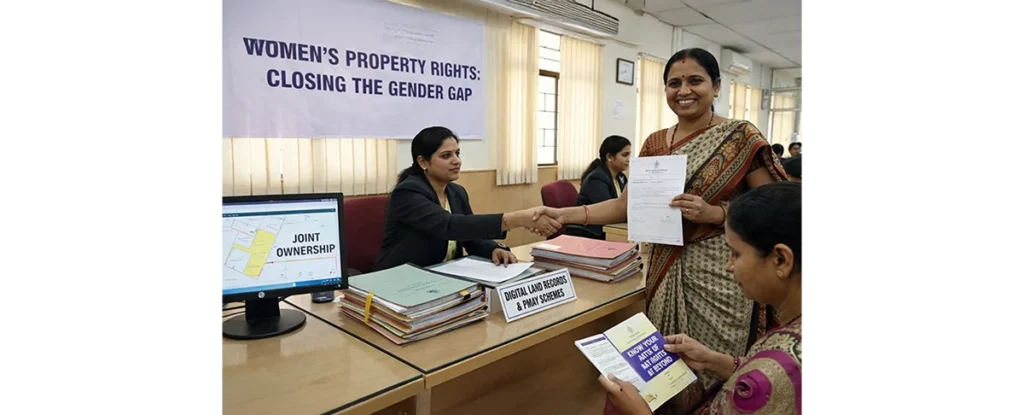
Women and Property Rights: How India Is Closing the Gender Gap in Ownership
India’s long fight for women’s property rights didn’t go in vain. In fact it is finally producing concrete results. We are moving upwards on the progress curve, thanks to a host of landmark laws and court battles aimed at silencing sexist traditions.
The 2005 Hindu Succession Amendment is lauded for giving daughters equal shares in ancestral property alongside sons, and Supreme Court rulings in recent years have pushed this further, even for tribal communities. The property lawyers at AM Legal note that family pressures and social norms continue to create bumps on the journey but the transformation won’t stop here.
Change won’t happen overnight but it’s in the making. Property advocates in Delhi are also helping women secure property thereby creating financial independence, better family outcomes, and less vulnerability. Law coupled with awareness will yield us historic results.
Prominent Legal Milestones Shaping Equality
The Hindu Succession (Amendment) Act of 2005 gave daughters equal footing to sons by making them coparceners of ancestral holdings right from birth.
The second in the string of landmark cases was the 2020 Vineeta Sharma case which made the law retroactive. Even if a father died before 2005, daughters get their due share today.
Tribal women scored a huge win in 2025 when the Supreme Court tossed out customs in a Gond community dispute, calling inheritance bans unconstitutional under Article 14’s equality clause. Customs can’t override fundamental rights without solid proof.
For wills that try to limit women’s control, courts often rule for full ownership under Section 14(1) of the Hindu Succession Act, though a 2024 case got bumped to a larger bench for deeper review. Property lawyers in Delhi can help you secure your rights as laid out in the will. Beyond Hindus, Muslim personal law leans on shares for daughters (often half of sons’), while Christians follow the Indian Succession Act for equal splits. A uniform civil code push simmers, but for now, these patchwork reforms mark progress.
Breaking Down the Numbers: Where We Stand
NFHS-5 lays it bare: 31.7% of women own land or a house either alone or jointly, lagging men’s 43.9%. Rural women fare slightly better with land access, hitting higher joint rates, and SC/ST groups reach 19.7% thanks to quotas and awareness drives. National Sample Survey data ties this to reform timelines and states that early Hindu Succession updates have helped register a significant jump in female holdings over decades.
Digital land records are flipping the game by exposing hidden biases and verifying titles faster. Pradhan Mantri Awas Yojana (PMAY) has titled millions of homes with women as co-owners, especially widows and singles, correlating with ownership bumps in program-heavy areas. Still, the gap persists: men own outright at triple women’s rate, underscoring why laws alone don’t close it.
Everyday Hurdles Women Face
Dig deeper, and patriarchy rears up. Families favor sons in partitions, revenue officials hand titles to men by default, and women lack birth docs or mutation knowledge to claim stakes. Urban life adds costs: apartments demand huge down payments, and in-laws expect property to stay “family male” territory. In rural setups, customs demand “non-discriminatory” evidence they seldom provide, leaving women landless even after legal wins.
NFHS highlights data flaws too. Coarse metrics hide intra-state gaps, stalling targeted aid. Broader fallout? Women without deeds face higher violence risks and poorer child nutrition, as studies link ownership to household stability. Panchayats run by men often botch scheme rollouts, limiting policy wins into paper promises.
Government Schemes Driving Change
PMAY stands out by encouraging women co-ownership across the board. It’s empowered over 4.21 crore households since launch. States like Karnataka and Telangana digitize records, auto-flagging women’s shares in joint holdings. Courts keep the pressure on, using “justice, equity, and good conscience” to strike biased customs.
NGOs like Landesa run village workshops, teaching mutation processes and will drafting. Budget 2025 upped funding for legal aid camps, targeting low-ownership districts.
Practical Steps and Family Talks
Women can head to tehsildars for inheritance claims or file civil suits with property docs. Gifts need registered deeds early.
Families, broach joint titles at dinners. It safeguards everyone. Lawyers advise mutation within 90 days of inheritance to beat limitation periods.
Looking Ahead to Full Parity
As 2025 Supreme Court nods accelerate reform, India narrows the gender divide. Ownership correlates with GDP boosts via women’s investments. But mindsets must catch up. Educate your sons and daughters alike and enforce digitization nationwide without any exceptions. True closure comes when property deeds reflect half the population’s rightful claim, turning legal wins into lived reality. Property lawyers at AM Legal continue to represent women who have been wronged so that they can reclaim their rights under a more just and equitable legal system.