
Justice Begins With Awareness: Why Understanding the Law Empowers Every Citizen
Justice does not always arrive with a drumroll. Sometimes it looks like a tenant telling a landlord, “That is not in the agreement.” Sometimes it is a teenager deleting a blackmailing message and going straight to the cyber cell instead of freezing in fear. All of that starts with something very unglamorous – knowing the law just enough to not feel lost.
In Delhi in 2025, this idea is finally stepping out of seminars and entering real life. Criminal lawyers in Delhi, especially at AM Legal, pick up the story when things have already gone wrong, helping people turn that awareness into actual defence, strategy, and justice instead of just frustration.
Why Legal Awareness Matters
Most injustice does not scream. It whispers from extra clauses, missing receipts, casual threats, and “this is how we do things here” shrugging. If a person has never really understood their rights, all of this simply appears as bad luck.
When the law is broken down into plain words instead of complicated sections, fear slowly makes space for clarity.
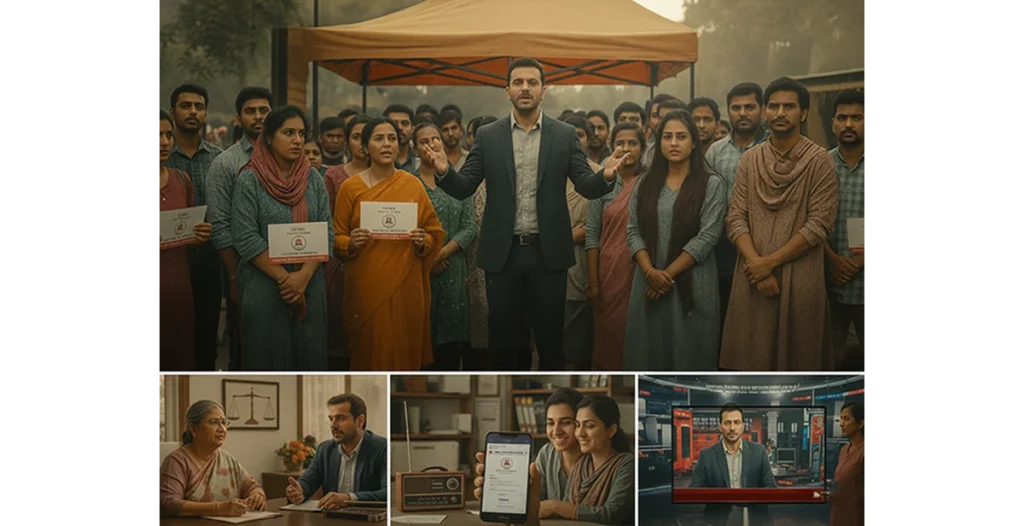
Legal literacy camps in neighbourhoods, school sessions, college events, online live sessions are happening more often and more intentionally. People are being told about everyday things that actually matter: what to do if the police stop you, what counts as online harassment, what protections exist against domestic violence, what tenancy rules say, how consumer rights work when a company refuses responsibility.
National Law University Delhi has been trying to switch off the “law is only for exams” mood. They run sessions on cyber safety because, frankly, that is where many of the new crimes live. Young people are scammed, bullied, stalked, and groomed online, and a lot of them do not even know they can use the law to push back. Other initiatives talk about mediation showing that not every problem needs to become a 10-year case.
The Delhi State Legal Services Authority does the kind of work that rarely trends but changes things on the ground. They hold camps in schools, community centres, mohallas, where people can simply walk in and listen. Volunteers and officers explain rights in simple language. They hand out basic booklets. They repeat points more than once because real people do not learn like exam toppers. On top of that, they use radio, social media, and digital campaigns so someone commuting on the metro or scrolling at night can still catch a line that makes them think, “Oh, I did not know I could do that.”
Across India, the bigger DISHA framework and legal literacy programmes keep this going at scale, training teachers, community workers, and youth groups so that awareness is not a one-time event but something that passes from person to person. It is slow work. It is also the only way this ever becomes normal.
Benefits of Being Legally Informed
Legal awareness shows up in the smallest decisions. It is there when someone says, “Email me the terms, I will read it before signing.” It is there when a customer refuses to be fobbed off with “company policy” and calmly asks to see the actual rule. Workers who know basic labour protections feel less shakily dependent on the mood of one boss. Tenants who understand their rights stop acting like they are begging for a favour just by living in a house they pay for.
One person using the system shows ten others that it is possible.
Legal awareness also changes how people function as citizens. Understanding voting laws, welfare schemes, and accountability mechanisms makes it harder for anyone to sell pure drama with no detail. People begin to ask things like, “Where is that written?” or “What does the notice actually say?” Democracy becomes a little less about blind trust and a little more about informed participation. As one saying goes, “Trust in God, but lock your door.” Legal awareness is that lock.
It is not glamorous, but it is the difference between feeling like life is happening to you and feeling like you have some say in how you respond. Institutions, universities, and government bodies are, in different ways, betting on one core belief: justice begins not when a case is filed, but when a person realises they do not have to quietly accept what is wrong.
One of the best Criminal advocates in Delhi, most prominently at AM Legal which is led by Advocate Anant Mishra, sit at a very human crossroads in this story. As criminal lawyers in Delhi, they meet people when things are already bad, an FIR has been lodged, a family member is in custody, someone has been cheated or threatened. Their job is not just to quote sections, it is to translate the law into options their clients can actually understand and choose between.
Law is a weapon and in the wrong hands, it becomes dangerous. Legal awareness is how ordinary citizens learn to hold that knife safely.